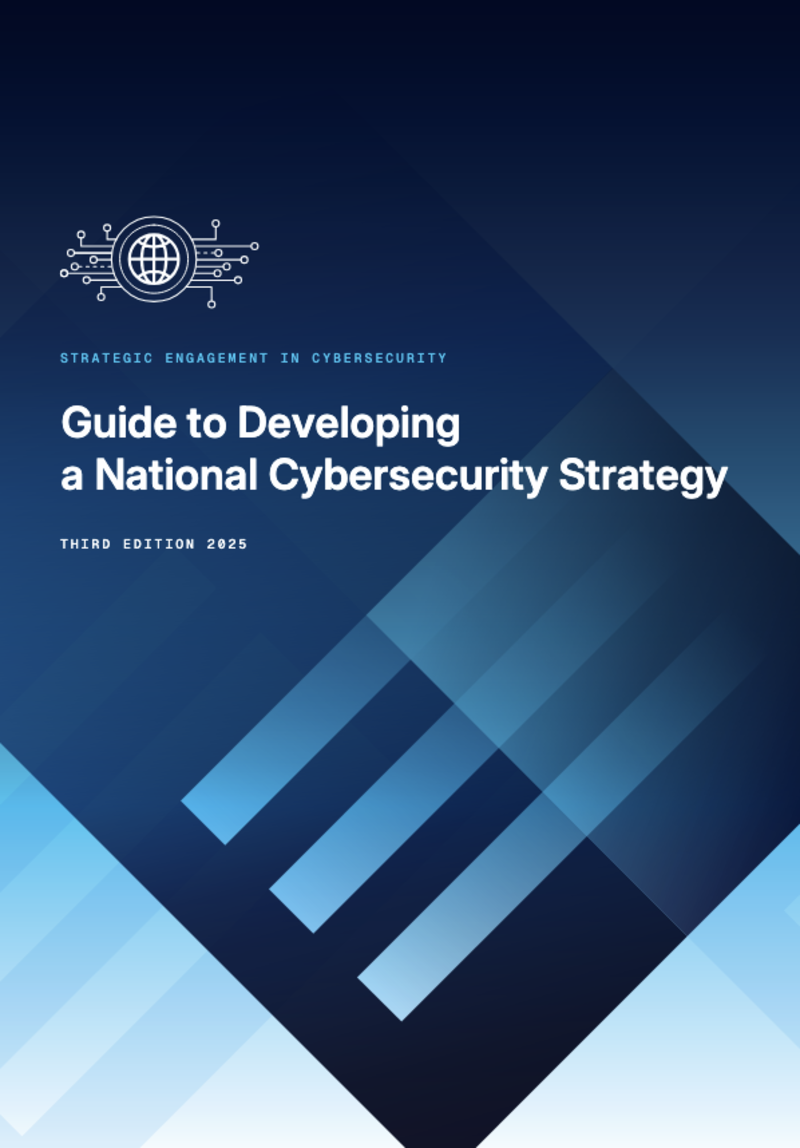

Third Edition of the “Guide to Developing a National Cybersecurity Strategy”
A Better, Bolder, and More Collaborative Playbook for Digital Resilience
The GCSCC as part of a global coalition of 37 organisations from government, industry, academia, and civil society this week released the third edition of the Guide to Developing a National Cybersecurity Strategy (“the NCS Guide”)—an updated, practical blueprint to help countries plan, implement, and continuously improve cybersecurity at scale.
As digital technologies power inclusive and sustainable development, governments face persistent and evolving cyber risks. The new edition sharpens the focus on actionable safeguards against evolving risk—from those posed by emerging technologies and the proliferation of connected devices to complex supply chains and evolving threat landscape—while elevating implementation roadmaps, measurement and continuous improvement, and cross-border cooperation.
The NCS Guide has become a widely referenced resource for national leaders and policymakers. As countries iteratively refine their strategies, adoption has surged—from 76 countries in 2018 to around 127 in 2021, and 136 today (according to the ITU Global Cybersecurity Index – GCI)—underscoring the importance of long-term, strategic planning to guide investments, set priorities, and build capacity across the public sector and the wider digital ecosystem.
What’s new in the 3rd Edition
- Hands-on implementation: A clearer sequencing, resourcing, and governance guidance.
- Measurement that matters: A stronger emphasis on monitoring, evaluation, and learning loops.
- Resilience by design: Practical safeguards for evolving risk landscape including emerging tech, growing interdependencies, and supply-chain risks.
- Global cooperation: tools to strengthen regional and international collaboration.
Built by many, for all
This edition is a result of an inclusive, multi-stakeholder effort, nearly doubling the group since 2021. It distills real-world lessons from countries on their second and third strategy iterations and signposts complementary publications to help teams move from policy to practice.
Download the Guide: https://ncsguide.org/